

Still dealing with back or neck pain and not sure what’s actually causing it?
At Truth Family Chiropractic, many patients come to us after trying stretches, rest, or even other treatments — but without clear answers about what’s happening in their spine.
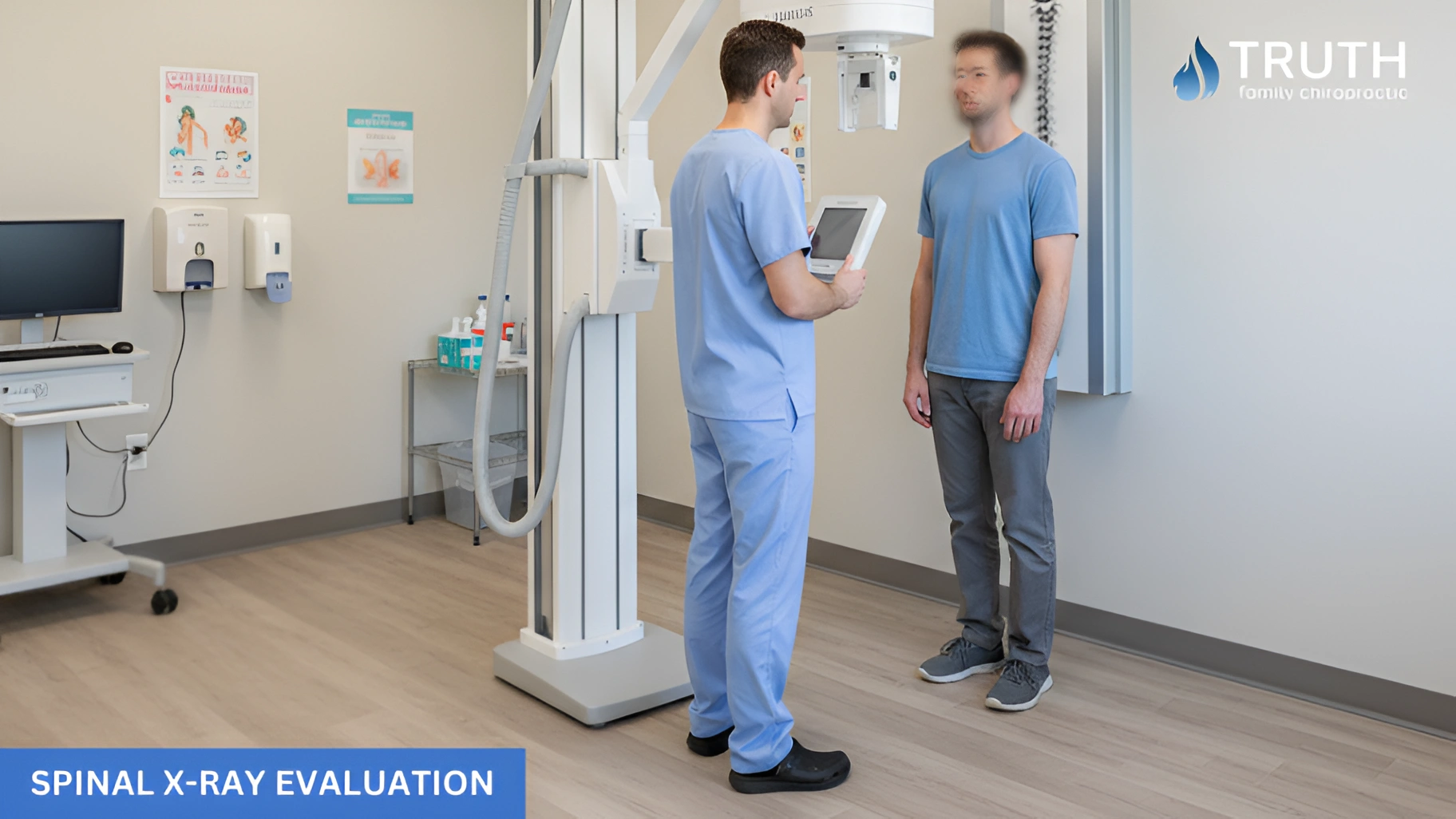
That’s where digital spinal X-rays can help.
When clinically appropriate, this imaging allows our doctors to see the alignment and structure of your spine more clearly, so your care plan is based on real findings — not assumptions.
What Digital Spinal X-Rays Help Us Evaluate:
Spinal Alignment: How your spine is positioned and whether imbalances may be contributing to discomfort.
Structural Patterns: Changes in the spine that may affect movement or posture.
Injury-Related Changes: Additional insight after an accident or persistent symptoms.
Care Planning Decisions: Objective information that supports a personalized chiropractic care plan.
Not everyone needs X-rays. Our doctors determine whether imaging is appropriate as part of your individual evaluation to ensure your care is thoughtful and specific to you.
Schedule Your Spinal Evaluation
SCHEDULE YOUR SPINAL EVALUATION TODAY
Concerned about back pain, neck discomfort, or posture changes? Schedule your spinal evaluation today to determine whether digital imaging is right for you.
Why We Use Digital Spinal X-Rays
A physical exam provides important information about how your body moves and responds. In certain situations, digital spinal X-rays offer an additional layer of insight by showing the structural framework of your spine.
This information helps guide decisions about technique selection, care frequency, and how to approach your spine safely and appropriately.
1. Evaluating Spinal Alignment
Imaging allows us to examine how individual vertebrae relate to one another. Even subtle positional changes can influence how pressure and movement travel through the spine over time.
2. Identifying Structural Abnormalities
Some spinal variations — such as curvature patterns or anatomical differences — may not be fully visible during posture or movement assessments. Recognizing these details allows us to tailor care more thoughtfully.
3. Detecting Degenerative Changes
Over time, joints and discs can experience mechanical stress. Understanding the condition of these structures helps us determine the most appropriate approach and avoid unnecessary strain.
4. Assessing Injury Patterns
Following accidents, falls, or persistent discomfort, imaging can provide clarity about structural stress before beginning certain corrective strategies.
5. Supporting Corrective Care Planning
When corrective care is recommended, X-rays can serve as a baseline reference. This allows us to monitor structural changes over time and adjust your care plan as needed.
At Truth Family Chiropractic, corrective chiropractic adjustments are used as part of a natural, drug-free approach to support better spinal function, posture, and overall movement in daily life.
When Are Digital Spinal X-Rays Recommended?
Digital spinal X-rays are considered only when imaging may influence how we approach your care. They are not automatically performed and are never used as a routine requirement.
Our doctors may recommend imaging in situations such as:
After Significant Trauma
Following a car accident, fall, or sports injury, imaging may be appropriate before beginning certain chiropractic techniques to ensure the spine is handled safely.
Persistent or Unresolved Symptoms
If pain has continued despite conservative measures, imaging may be considered to determine whether additional precautions or modifications are necessary.
Complex Symptom Patterns
When symptoms suggest deeper mechanical involvement — such as radiating discomfort or long-standing joint irritation — imaging can help guide technique selection.
Noticeable Postural or Curvature Changes
When structural changes are visible during examination, imaging may be used to confirm findings before initiating structured corrective protocols.
Before Advanced Corrective Programs
In some cases, imaging is recommended prior to beginning targeted corrective approaches to ensure care is appropriate for your spine’s current condition.
Our approach is simple: imaging is recommended only when it meaningfully supports safe and informed decision-making.
Are Digital Spinal X-Rays Safe?
It’s normal to have questions about radiation exposure.
Digital spinal X-rays use modern imaging technology designed to reduce radiation compared to older film systems. The amount of exposure from a standard spinal X-ray is low and carefully controlled.
Imaging is performed using focused positioning to capture only the area being assessed. Protective measures are used when appropriate to limit unnecessary exposure.
X-rays are not recommended during pregnancy unless medically necessary, and alternatives are considered when appropriate.
If you have concerns about imaging, our team is always available to discuss your questions before proceeding.

Chiropractor
Reviewed & Performed by Our Experienced Chiropractic Team
With over 20 years of clinical experience, Dr. Kevin Miller has extensive experience evaluating spinal conditions and structural health. His approach to care is grounded in careful assessment, patient education, and individualized recommendations.
Dr. Miller’s own journey with chiropractic care began after a sports-related injury, giving him a personal understanding of how spinal health can impact overall function and quality of life. That experience continues to shape his commitment to thorough evaluations and thoughtful treatment planning.
All imaging is reviewed personally by our licensed chiropractors before any recommendations are made. This ensures that findings are carefully considered within the context of your overall health and goals.
What to Expect During Your Visit
Knowing what to expect can make any appointment feel more comfortable.
Here’s how the process typically works:
1. Consultation
Your visit begins with a conversation about your symptoms, health history, and any concerns you may have. This allows us to understand your goals and determine the most appropriate next steps.
2. Physical Examination
A focused examination is performed to assess posture, movement, and areas of discomfort. This helps us gather important clinical information before considering imaging.
3. Determination of Imaging Necessity
Based on your consultation and exam findings, our doctors will determine whether digital spinal X-rays are appropriate. Imaging is only recommended when it meaningfully supports your evaluation.
4. The Imaging Process
If recommended, the X-ray procedure is straightforward and typically takes only a few minutes. You will be positioned comfortably while focused images are captured of the area being assessed.
5. Review of Findings
Your chiropractor will review the images carefully and explain what they show in clear, understandable terms.
6. Next Steps
If care is recommended, your chiropractor will review the available options with you and address your questions so you can decide how you’d like to proceed.
How Digital Spinal X-Rays Improve Your Care
When used appropriately, digital spinal X-rays can enhance the accuracy and direction of your chiropractic care.
More Precise Adjustments
Understanding the position and condition of specific spinal segments allows adjustments to be delivered more intentionally. This can help ensure that force is applied in a way that supports your body’s needs.
A Clear Baseline for Your Spine
Imaging can serve as a starting reference point. This gives both you and your doctor a clearer picture of your spine at the beginning of care.
Tracking Structural Changes Over Time
For patients participating in structured corrective programs, follow-up imaging may be used when appropriate to evaluate measurable changes and guide next steps.
Safer Corrective Approaches
In cases involving long-standing stress patterns or degenerative changes, imaging allows care techniques to be selected and progressed thoughtfully.
Digital spinal X-rays often work alongside services such as Corrective Chiropractic Adjustments, Posture Evaluations, and guided Therapeutic Exercises to support a well-rounded approach to spinal health.
Frequently Asked Questions
1. Do I need an X-ray before seeing a chiropractor?
Not every patient needs an X-ray. At Truth Family Chiropractic, imaging is considered only when it may add meaningful information to your evaluation.
Your doctor will determine whether digital spinal X-rays are appropriate based on your individual situation.
Your doctor will determine whether digital spinal X-rays are appropriate based on your individual situation.
2. Will I get an X-ray at my first chiropractic visit?
X-rays are not automatically performed during your first visit.
After your consultation and physical examination, your chiropractor will decide whether imaging is necessary. Many patients do not require X-rays.
After your consultation and physical examination, your chiropractor will decide whether imaging is necessary. Many patients do not require X-rays.
3. How does a chiropractor decide if I need an X-ray?
The decision to recommend imaging is based on your symptoms, health history, and examination findings.
If imaging may influence how your care is approached, digital spinal X-rays may be recommended.
If imaging may influence how your care is approached, digital spinal X-rays may be recommended.
4. Are chiropractic X-rays safe?
When used appropriately, digital spinal X-rays are considered safe.
Modern digital systems are designed to minimize radiation exposure, and imaging is only recommended when clinically necessary.
Modern digital systems are designed to minimize radiation exposure, and imaging is only recommended when clinically necessary.
5. How much radiation is involved in a spinal X-ray?
Digital spinal X-rays use controlled levels of radiation to capture clear images of the spine.
Modern systems are designed to reduce exposure compared to older film-based technology.
If you have concerns about radiation, your chiropractor can discuss them with you before imaging is performed.
Modern systems are designed to reduce exposure compared to older film-based technology.
If you have concerns about radiation, your chiropractor can discuss them with you before imaging is performed.
6. Are chiropractic X-rays different from hospital X-rays?
Chiropractic digital spinal X-rays use the same general imaging principles as other medical X-rays. The primary difference is the focus — chiropractic imaging is typically centered on spinal alignment and structural assessment to support musculoskeletal care.
7. Can children receive digital spinal X-rays?
In some cases, imaging may be considered for children when clinically appropriate. The decision is made carefully based on the child’s symptoms and evaluation findings. If recommended, modern digital imaging systems are used to help minimize exposure.
8. Can pregnant women receive spinal X-rays?
Spinal X-rays are generally avoided during pregnancy unless medically necessary. If you are pregnant or think you may be pregnant, it is important to inform your chiropractor before any imaging is considered so appropriate precautions can be taken.
9. How long does a spinal X-ray take?
The imaging process itself typically takes only a few minutes. Including positioning and preparation, the full appointment time may vary depending on your overall evaluation.
10. Will I feel anything during the X-ray?
No. Digital spinal X-rays are painless. You will simply be asked to stand or position yourself as instructed while the images are taken.
11. Are digital spinal X-rays covered by insurance?
Insurance coverage for spinal X-rays varies depending on your individual plan.
If imaging is recommended, our team can help review your benefits and discuss any potential out-of-pocket costs before proceeding.
If imaging is recommended, our team can help review your benefits and discuss any potential out-of-pocket costs before proceeding.
12. How much does a spinal X-ray cost without insurance?
The cost of imaging can vary. If you do not have insurance coverage, our office can provide pricing details and discuss your options prior to scheduling or performing X-rays.
13. Is imaging included in my initial evaluation?
In some cases, imaging may be part of a comprehensive evaluation, but it is not automatically included for every patient.
Your chiropractor will determine whether digital spinal X-rays are appropriate based on your assessment.
Your chiropractor will determine whether digital spinal X-rays are appropriate based on your assessment.
14. Do I need to prepare for a spinal X-ray?
In most cases, no special preparation is required.
You may be asked to remove certain items such as jewelry or metal accessories before imaging to ensure clear results.
You may be asked to remove certain items such as jewelry or metal accessories before imaging to ensure clear results.
15. What should I wear to my appointment?
It’s best to wear relaxed, uncomplicated clothing and avoid pieces with metal elements during imaging.
If necessary, specific instructions will be provided prior to imaging.
If necessary, specific instructions will be provided prior to imaging.
16. Will I need follow-up X-rays during my care?
Not all patients require follow-up imaging.
In some cases, if you are participating in a structured corrective program, repeat imaging may be considered to monitor measurable changes over time.
Your chiropractor will discuss this with you if appropriate.
In some cases, if you are participating in a structured corrective program, repeat imaging may be considered to monitor measurable changes over time.
Your chiropractor will discuss this with you if appropriate.
17. How will I receive my X-ray results?
Your chiropractor will review your images with you and explain the findings in clear, easy-to-understand terms.
You’ll have time to review the findings and talk through any recommended options.
You’ll have time to review the findings and talk through any recommended options.
18. Can I get a copy of my spinal X-rays?
If you would like a copy of your imaging, you can request one from our office.
Our team can explain the process and any applicable policies regarding image records.
Our team can explain the process and any applicable policies regarding image records.
19. Are there situations where X-rays are not recommended?
Yes. Many patients do not require imaging. If your evaluation does not indicate a clear clinical need, digital spinal X-rays may not be recommended.
20. What happens after my spinal X-ray is completed?
Once your X-rays have been carefully reviewed, your chiropractor will explain what they show and discuss the possible next steps with you.
If care is advised, you will have the opportunity to review your options and move forward at a pace that feels comfortable for you.
If care is advised, you will have the opportunity to review your options and move forward at a pace that feels comfortable for you.